


Letters to Coba
At the Frans Hals Museum, nine women from Haarlem met weekly to write, share, and create. Women with roots in the Netherlands and women from other cultural backgrounds met. Guided by Susanne Gijsbers and Aafke de Vries, we wrote personal stories inspired by the life and paintings of artist Coba Ritsema (1876-1961).
Coba Ritsema found her freedom at a time when it wasn't a given for women. She chose her love: painting. She formed a group with other female artists who supported and inspired each other. They called themselves "Palette Friends."
The theme of freedom and sisterhood was central to our workshops. Each session revolved around one of the four elements: earth, water, fire, and air. We explored: Where are you? Where is your life flowing? What ignites your passion? Who carries you?
We wrote about small and big moments in life. Finally, each woman wrote a letter to Coba that incorporated a theme from the workshops. With these "Letters to Coba," we traveled through time. You can listen to them on this page.
In the final session, each participant, guided by artist Petra Vlasman, created a collage that related to a story or theme that emerged during the sessions. On this page, you'll find a collage by each participant. Each participant chose one story, which we wrote and read aloud to each other during the workshop. Together, the stories form a mosaic of voices: personal, powerful, vulnerable, and warm.
We invite you to read, watch and be touched.
Based on an idea by Mirna Ligthart of Hidden Stories and in collaboration with the Frans Hals Museum and Troupe Courage
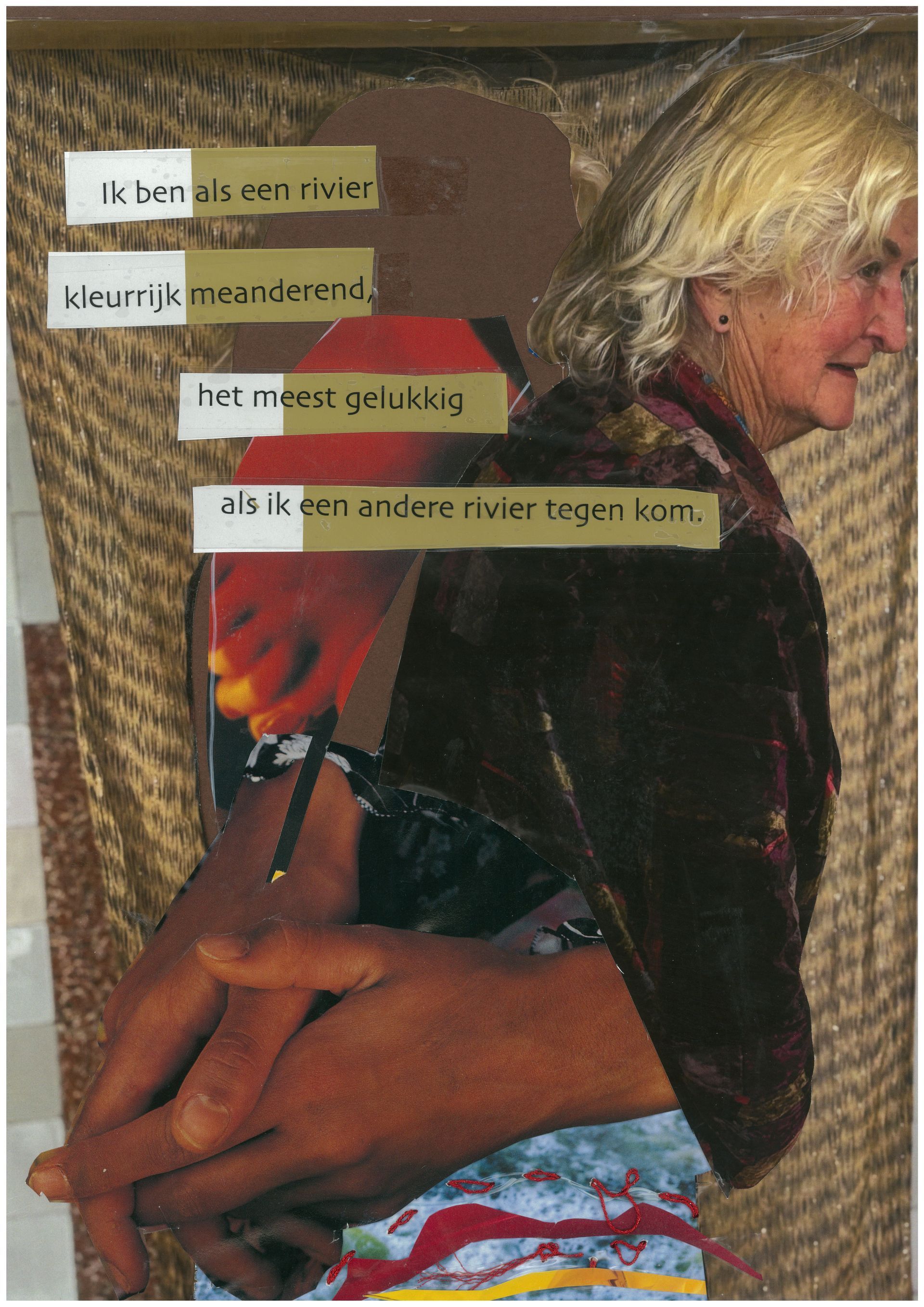
Eileen | Morning in the Fall
I'm in the kitchen, just up. The sun is rising too, wonderful. I put a sweater over my nightgown. I have to do that again, despite the sun, still a little pale. I check the vegetables outside and bring them into the kitchen: potatoes, mushrooms, onions. I pop a coffee capsule in the machine. Mmm, the smell of coffee, sunshine. Across the canal, some lights come on. We wave briefly. New day. What now? Make something for my sick neighbor… soaking beans? Takes too long. Red lentils are quicker. I turn on Radio 4… hey, the Antillean pianist Statius Müller… The sounds jump into my body. Chopping vegetables, the smell of onions braising in the pan. What kind of spices this time? I smell the jars on the spice shelf: vegetarian masala this time.
Hop, add some mushrooms and potatoes, and the red lentils. Simmer away, I'm going into the backyard with a cracker and coffee—sun on my face, plucking the dead flowers here and there, they say, to encourage flowering. I hear the laughter of my neighbor boy upstairs, and I'm incredibly happy with the here and now.
Listen to Eileen's letter here:
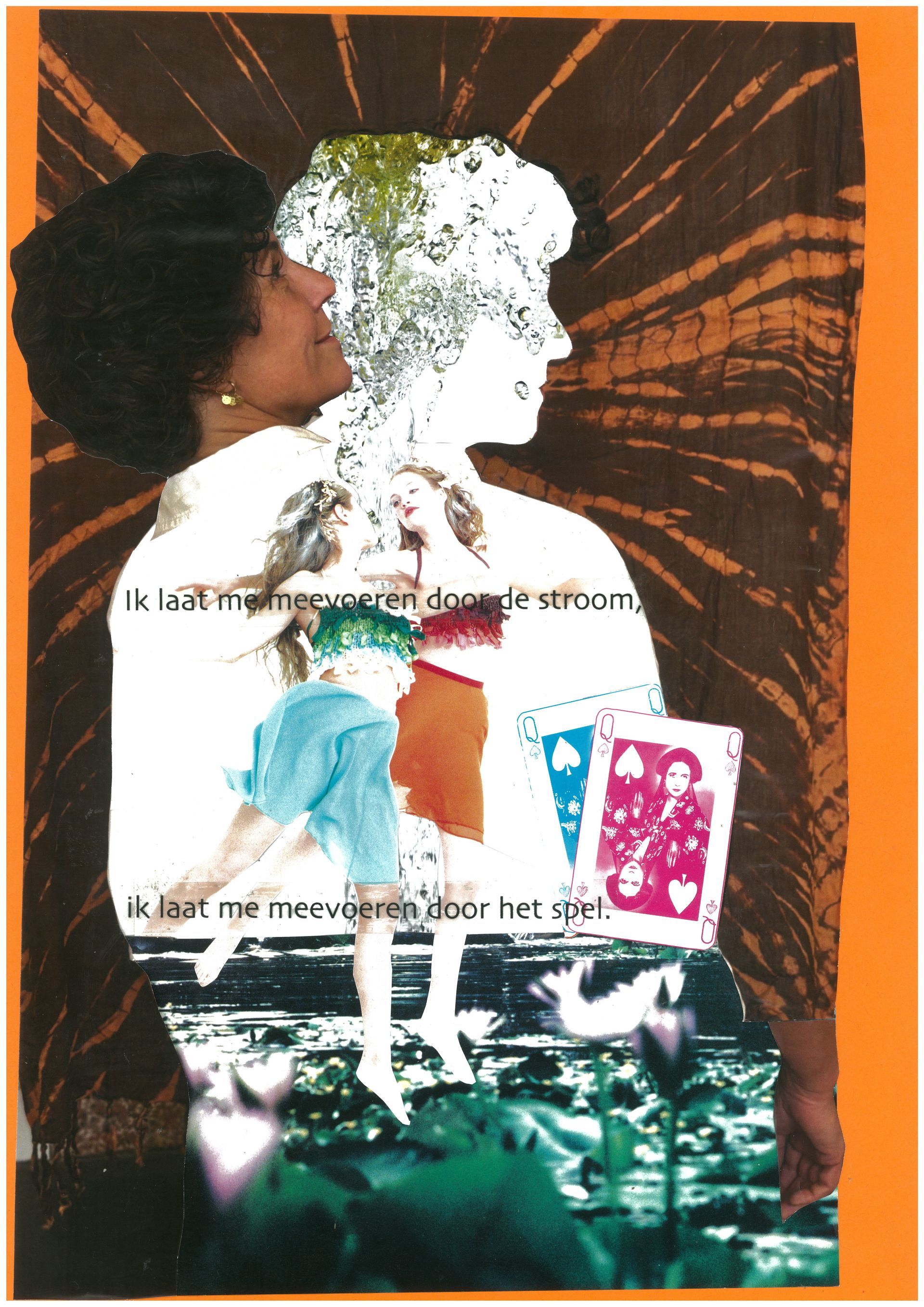
Suzanne | My Blue Pony
I'm sitting on my little blue granny bike, riding around in circles on the little square in front of my house. Well, a little square? More like an overgrown sidewalk in front of the parking bays. I'm riding around in circles. Endlessly and alone. I don't need anyone because in my imagination it's wonderful. I'm doing what I love most: horseback riding! In my mind, I'm riding my pony. My sweet, long-cherished pony. The little square is the riding school where I, with great concentration, perform all the dressage tests I can remember from my weekly riding lessons. Halting at X and greeting the judges. Changing hands at F. A serpentine circle with three arcs. My pony willingly follows my instructions. This is my biggest dream. And I live it every day. On my little blue bike. On the little square in front of my house.
Listen to Suzanne's letter here:
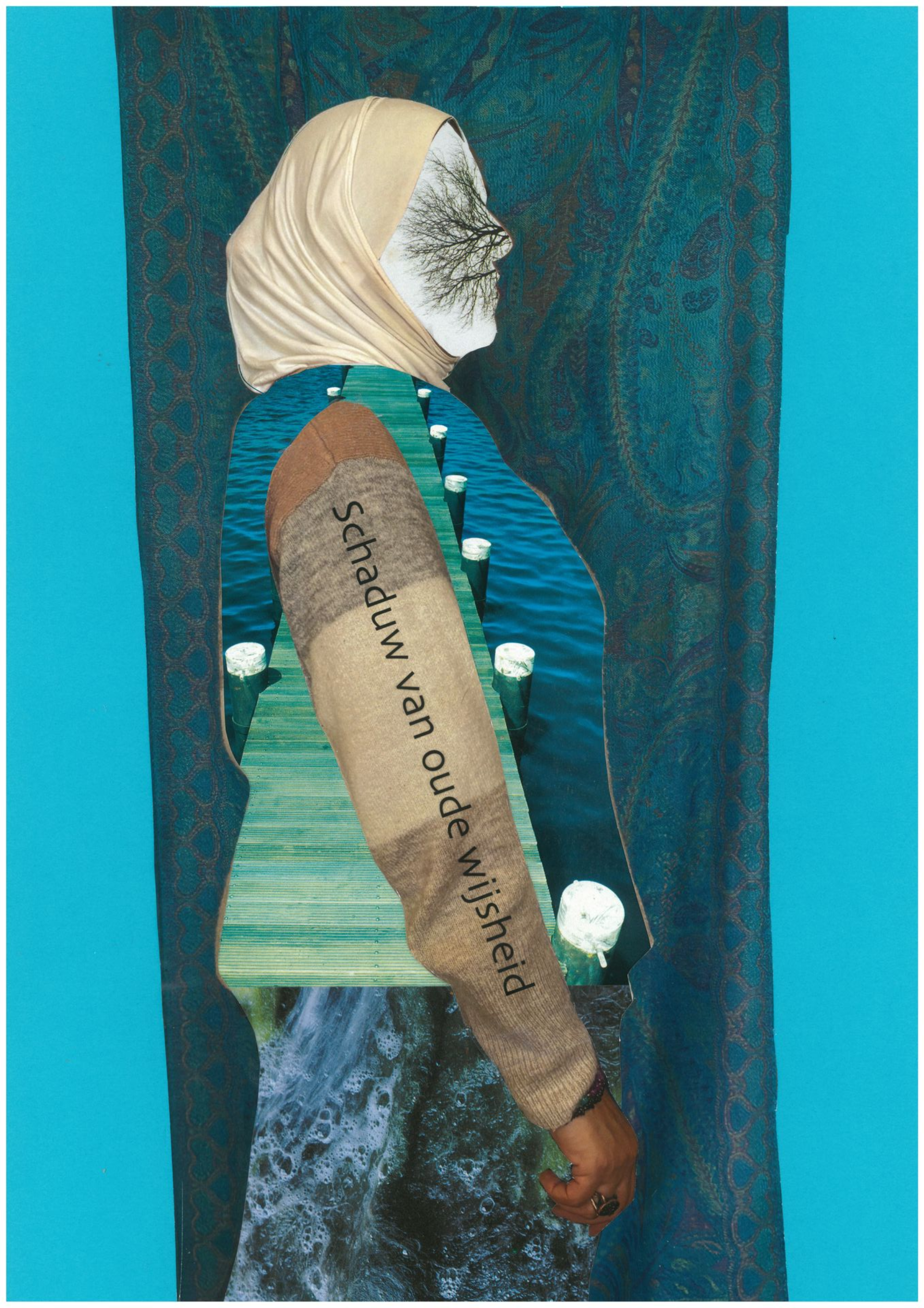
Marwa | Mirror of the goal
I feel grateful, but also sad, for the friendship I had long ago when I was about ten years old. My friend was called Nada. At school in Aleppo, we sat next to each other. She looked very different from the other children. She was blonde and had very fair skin. Her mother was Yugoslavian, so she didn't speak Arabic well yet and didn't dare to speak it. I wanted to help her. I wrote her homework on slips of paper that I tore out of my notebook and gave to her. Nada didn't write on those slips of paper, she drew. She drew Marie Antoinette, in great detail, with curls and hoop dresses. I found it so beautiful that I decided to try it myself. From that moment on, we skipped all recess and just drew. Now my life is here in the Netherlands. I feel homesick for my friend whom I lost touch with. I miss her, and that saddens me. She ignited my talent and shaped my first steps on the path to becoming an artist. It all started there, together with Nada.
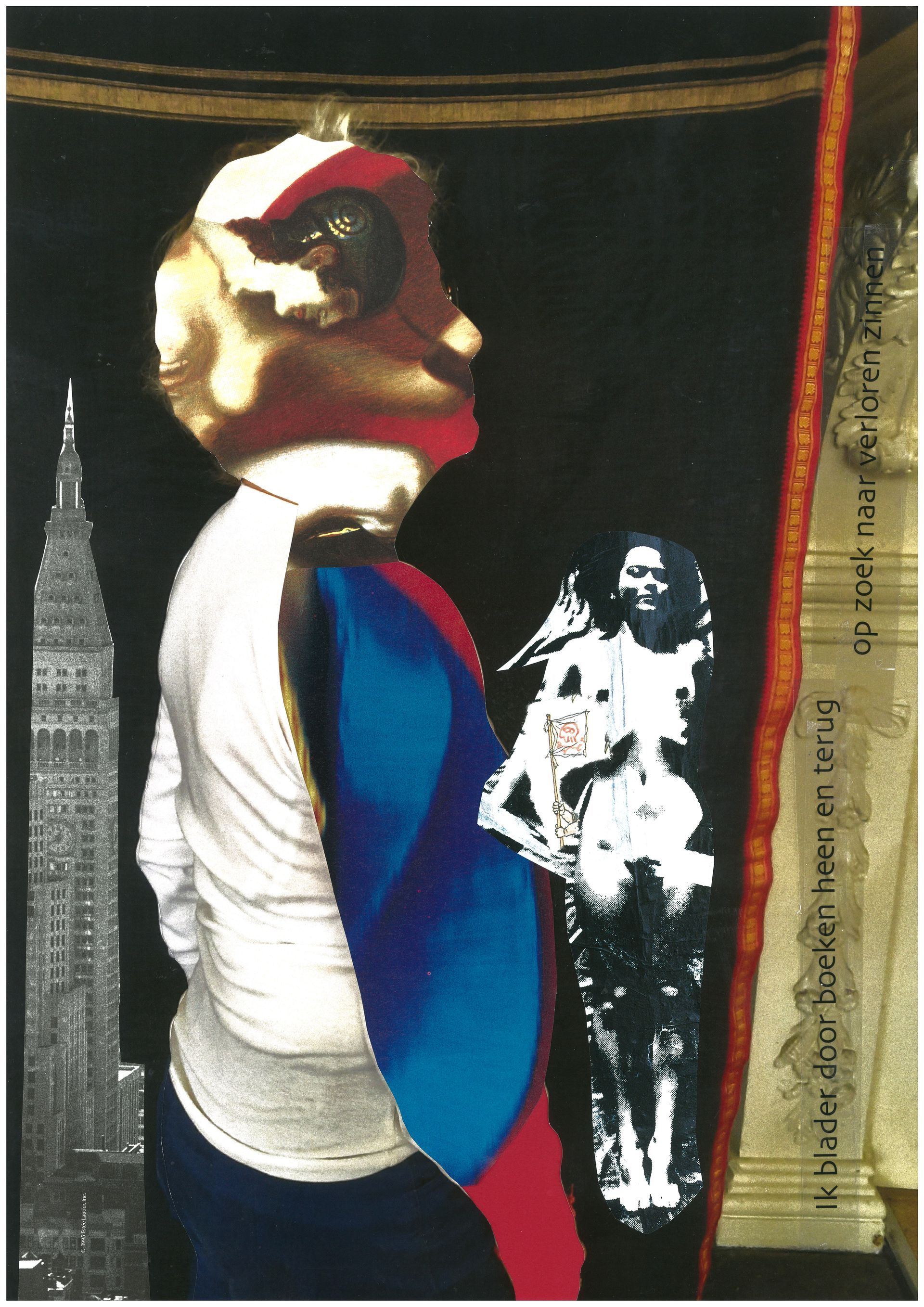
Marian | When the storm falls
I'm wearing black and white today. White on top and black on bottom. The agreed-upon colors.
After the practice singing - 1, 2, 3 and 4 voices on the ninth floor of a conference center - we walk to the Malieveld.
They are already there, in our finger.
With signs, flags, drums and trumpets.
Noise.
We're joining in.
My heart beats impatiently, my hands clutch the black folder, on my shoulders the backpack with sandwiches, hot tea, sweets to lubricate my throat.
Further on, police on horseback. Vans.
We walk in a thick line across the field towards the A12.
To our left across the street, another row starts, another finger.
‘ANOTHER WORLD IS POSSIBLE’
‘CLIMATE JUSTICE NOW’
We wait at the edge of the highway.
Cars speed past, in four lanes.
How did we get here? This won’t work, it can’t be done.
A small car with a cleaning company logo slows down, almost stops, then accelerates again, and… suddenly the road is empty, and we're walking onto the A12, signs and flags flying high, we've arrived. The police warn us through a megaphone. We're not allowed here. Force might be used.
Yet now the road is before us.
Nervous, busy instructions, here the sopranos, there the altos, the basses, the trumpet, the flute and the drum.
All around us noise, slogans, shouts.
The conductor raises her hands and we begin the 4-part 'When the storm falls'.
It becomes quiet around us.
I just sing, I'm there.
Be where it matters to be.
Listen to Marian's letter here:
Henryke | Where things don't flow so easily
Crossing the border. New life, starting over or being born again.
Unintelligible words.
One long, strange sound. Discomfort and shame, a lack of trust and security. It goes on and on. And then those visitors. They're sitting in the living room: cigarette smoke, wine, beer, snacks. And then those words again—no connection. No mutual connection. I hear them laughing!? I look uncertainly at my clothes. Are they laughing at me? Or are they cheerful and making lame jokes? For convenience, I laugh at the joke. I tolerate it better that way. I sit still and don't let anything show, reserved and afraid they'll talk to me. Quickly, quickly learn to connect the loose threads of life, groping in the emptiness, until they finally find each other?
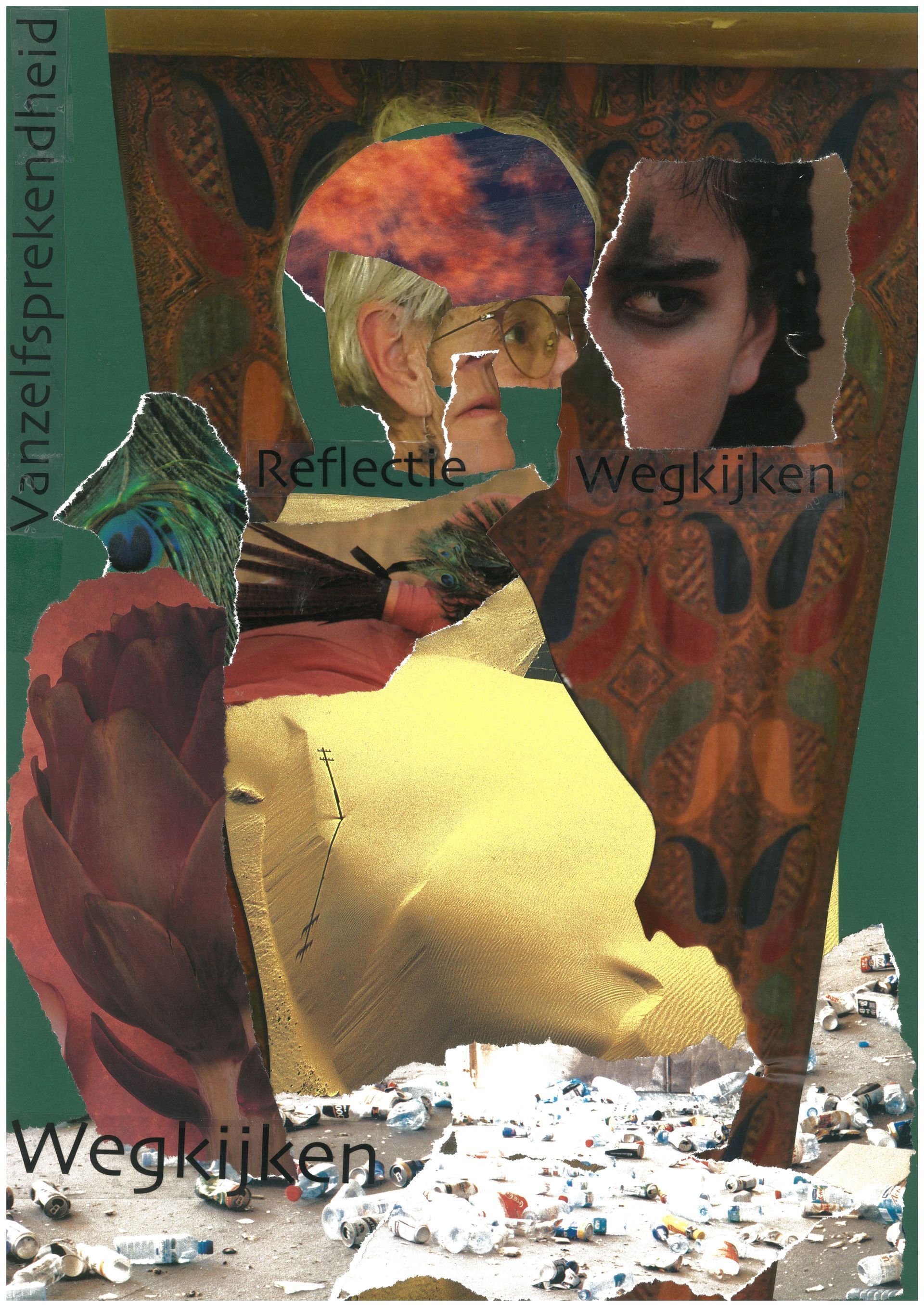
Clazina | The power is ours
I'm sitting on the couch watching the news. It's August 20th, and the news begins with the news that a young woman, Lisa, seventeen, has been murdered. Details follow, along with various assumptions about the alleged perpetrator.
I listen and look on in dismay, bewilderment takes hold of me.
Although I don't have children, I try to imagine what it must be like for her parents to receive this message.
Horrible, horrible, it must have left a hole in their hearts, they must have felt amputated.
Days later, more information gradually emerged through various media outlets. I was horrified and very angry about it. Fortunately, such a murder doesn't happen every week; they're "incidents."
Because every eight days, a woman is murdered in the Netherlands. I hear it on the radio, see it on television, and the reports reach me through various media. The reports touch me deeply every time. When another woman is murdered, people often talk about "the relationship atmosphere" in which it happened. It's called "domestic violence." I think of me! The media, but certainly also politicians, look the other way, and mitigating circumstances are suggested. I want to shout from the rooftops that this has to stop. The slogan during the demonstration, "The night is ours," could be changed to "The power is ours." Because recent figures show that most perpetrators, the creeps, are in your immediate vicinity; sometimes they're even next to you in bed. Many women are in unhealthy, toxic relationships. I want to stand up against this injustice and try to engage in discussion with the people around me. With determination, I want to demonstrate and denounce this injustice. And fortunately, those responsible are now also becoming more awake.
Later that evening, I'm going for a walk with my guest dog. Although I feel sad, I still find some comfort in it.
Listen to Clazina's letter here:
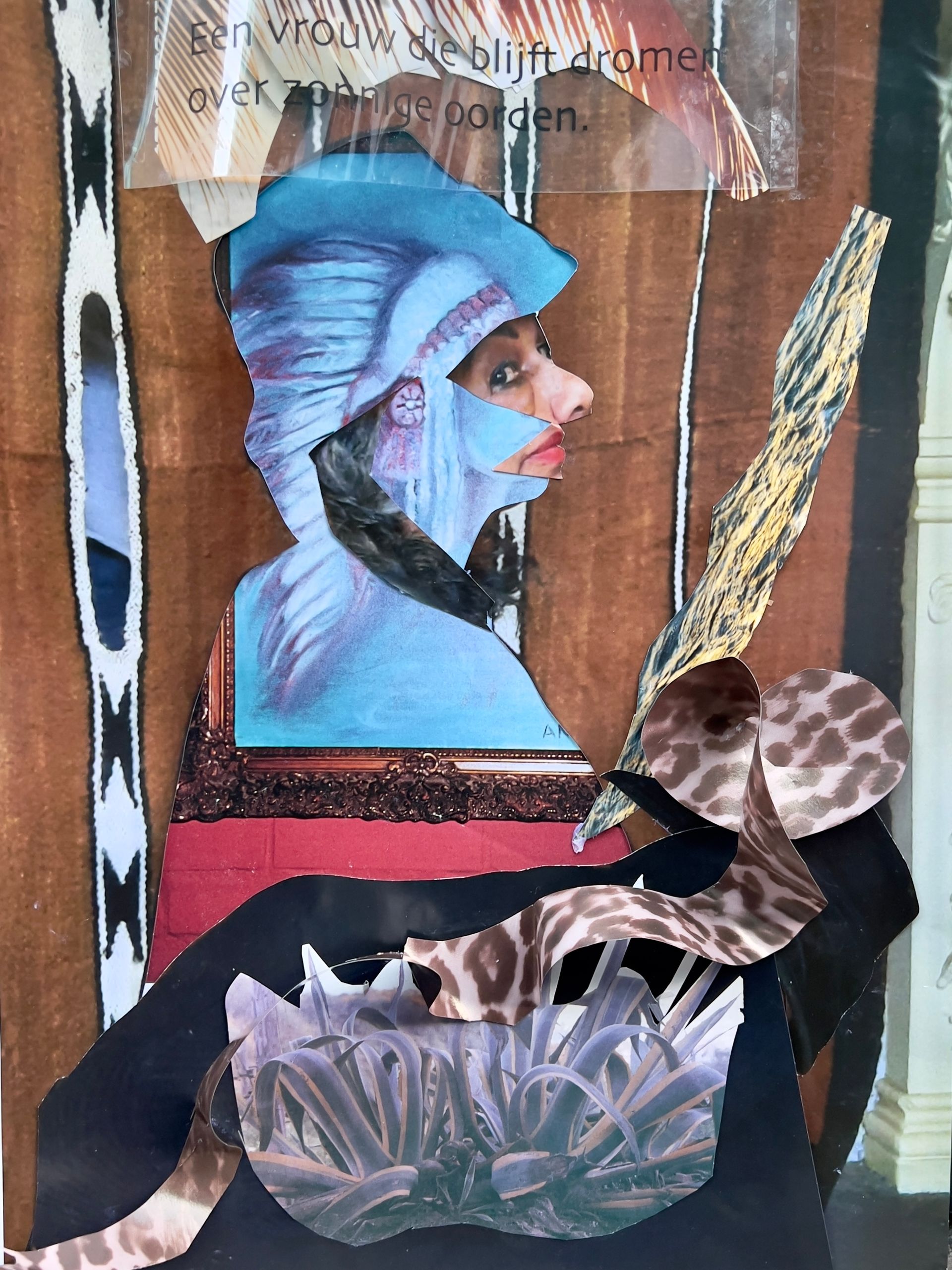
Emilia | Carried by the world's oceans
1 | The Children's Paradise
The moment we had to leave a 'children's paradise' is forever etched in my heart.
The paradise island, surrounded by pearly white beaches and azure blue sea, crystal clear, soft, warm and a rustling playful bath for children.
A place adorned with cacti, an astonishing array of animals, colorful birds, and fascinating dividivi trees of the legume family.
The constant northeast trade winds that blow strongly across the land every day have shaped the dividivi trees so that they grow in one direction.
The right play tree for children.
The exotic realm I wallowed in was primarily my birthplace.
A house built on solid rocks supported by a conical hill 165 meters high. Situated right in the center of the island, the backyard was so expansive that all the natural elements for children's entertainment were present.
It was the 1960s when we decided to leave the island for good. Protesting didn't help; it felt like a fight, and I'd lost it. Displacement, breaking away, away from home.
To an unknown place, an unknown brand... Spanish-speaking Hollanda.
Only heard about it and learned about it from history and geography lessons at the Dutch school, Mon Plaisir. That's where it was drilled into us: "our motherland."
At dawn, the sun was already shining through the glass shutters. It was July 1st, a period that remains etched in my memory as a period of light overshadowed by a darkness that struck like a massive bombardment.
As heavy and massive as the large brown trunks that were also carried 'without will'!
The girl was dragged away with all her might, a kind of abduction; taken from a safe, tipi-like, sun-filled world, the traumatic event.
The checked blue dungarees with spotless white blouses underneath that she and her sister were wearing. Hers was now wrinkled from clinging to the doorframe.
The bows from her long black braids lay torn on the tiles of the empty living room.
The neighborhood cried.
Outside, cars were ready to leave her beloved, ever-dancing street.
Eyes watery.
Full of fire, they are the brown mirrors of her soul.
In my mind, every detail was captured vividly.
Of the farewells and many embraces of her deeply cherished childhood world.
2 | The looks of the warm-blooded girl
The large, ocean-going passenger ship carried the native princess and her family on its back, protecting them from the torrent of high waterfalls and rolling, inky waves.
Our prison barracks was on the third floor below, right next to the engine room.
Deafeningly loud thumping.
Day and night.
We were heading to an area that, to me, only existed on a world map.
The others lay seasick in the cabin.
I went on a search and contacted one of the crew members. His name was Albert.
He let me eat in the first-grade dining hall.
I also remember a rescue exercise that took place in the middle of the night. The stairs were crowded. We jumped into the first lifeboat we saw on deck. Of course, it was the wrong one. We were destined for the eighth lifeboat. I can still see the smile on my mother's face, who must have thought: in case of disaster, we'll jump into the first lifeboat we saw. This adventurous journey lasted seventeen days before the wheelless vessel finally smelled its "home port," the eastern docks of Amsterdam, after having sniffed out a few islands on its ocean voyage.
The warm-blooded girl's gaze was fixed on a patch of drab grayness. It loomed as she entered a perpendicular canal; it was palpably a cold, dreary land.
Later I understood that it was IJmuiden, that first introduction to Holland.
The country where I would have to stay from now on. Leaning against the railing, my feet nailed to the railing, my thoughts too.
I want to go back, take me back!
3 | Atlantic Ocean; the beginning of a new story of a fiery child.
My niece had gone to the playground. Aunt Rita thought she should come in now and told me to pick her up, so I'd know where the playground was right away, she said. She showed me the way.
The tropical girl walked alone down the street like a curious newcomer, looking around in amazement.
No recognizable points, colorless, lifeless.
So different from the warm air currents and smells I was used to.
On the playground, the tropical child was abruptly surrounded by a group of 'white-collar' lads.
Bad voices, it sounded like a very false choir:
“Get lost, brown poop Chinese!”
“What are you doing here?”
“Go back to your own country!”
She looked intently at all the mouths and remained silent. It still echoes and resonates daily. A dreary melody... This is never your home.
Persistent, chilly, harsh, low in temperature, low degree of warmth, icy stream cool, bleak and misty.
Sometimes no heat in the open air for months.
There are a few bright spots over the past sixty years of living together, namely loved ones and wonderful friends.
Yet I am and will remain a visitor.
The navigable waters continue to wait for "something" somewhere in a haven. In her dreams, she embraces intensely, yearning for such brighter days. Where sunlight shines daily, surging across a sultry sea of love.
Tropical woman, go home!
Listen to Emilia's letter here: